Ode to science's disproven theories
April 2025
A few days ago, while playing online video game FFXIV, I had the final confirmation that the people behind this game are freaking genius nerds. Let me explain: there is a powerful character that you fight in the game called Athena, kind of a mad scientist who is terribly thirsty for power and thrives to ascend to godhood. According to her beliefs, the world is broken and only she can fix it by finding its true meaning through soul creation, this put her on the path of forbidden and unethical scientific researches (such as using her son as guinea pig). You eventually come to blows with her and put an end to her zealous ambitions, but most importantly you show her how wrong she was, and how all her convictions were founded on wrong bases, her scientific method was inherently fallacious.
What's so genius behind this you must ask ? Well it's the fight itself. See, in her efforts to bury you underground, Athena uses many attacks that are named after superseded real world scientific theories, theories that were put forward at some point in time but were lately proven to be wrong and eventually replaced with others (or in cases just simply forgotten). It fits perfectly the narrative of Athena, a brillant mind who in her search for the truth started imposing her wrong vision of the world, dismissing the real truth and blaming the world for being broken when she doesn't reach satisfactory results.
I thought it could be a fun idea to list these theories and share some of the stuff the amateur I am knows about them! (Thanks to /u/MateusMalice for providing the stepping stones).
Gaiaochos/Geocentrism:
Here's probably the one theory in this list that held fast and was considered true the longest in time. The Geocentric model is a description of the universe which establishes Earth as the object around which the Sun, Moon, stars, and planets orbit. Earth is literally the center of the universe according to this model, a belief that was extremely predominant during ancient times, especially in European and Egyptian civilizations.
We would have to wait until the 17th century to refute this idea in favor of the heliocentric model, that puts the sun as the center of our solar system. Kepler, Galileo, and Copernicus were all advocates for this newer model, but the transition wasn't easy, notably because of the Church which considered heliocentrism blasphemy.
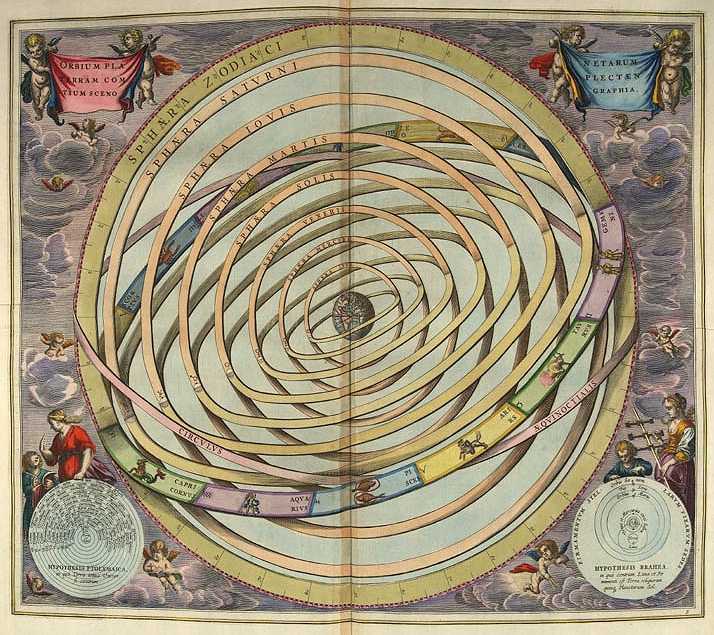 The Ptolemaic system, otherwise known as the Geocentric model
Caloric Theory:
Caloric theory is one those theories which, even though it is considered obsolete today, has explained many, many natural phenomenons and considerably helped advance science and engineering. According to this principle, heat is a weightless gas called Caloric, it is self-repellent which means it would flow from regions more dense in Caloric (ie: hotter) to regions less dense in Caloric (ie: colder). And as a weightless gas, it could pass through pores of solid and liquid materials.
Caloric was popular until mid-19th century, the newer and cooler thermodynamics principles saw heat simply as energy that was released from energy transfer between two systems due to temperature difference, no fancy gas involved. This energy is kinetic and is the result of vibrating and colliding atoms.
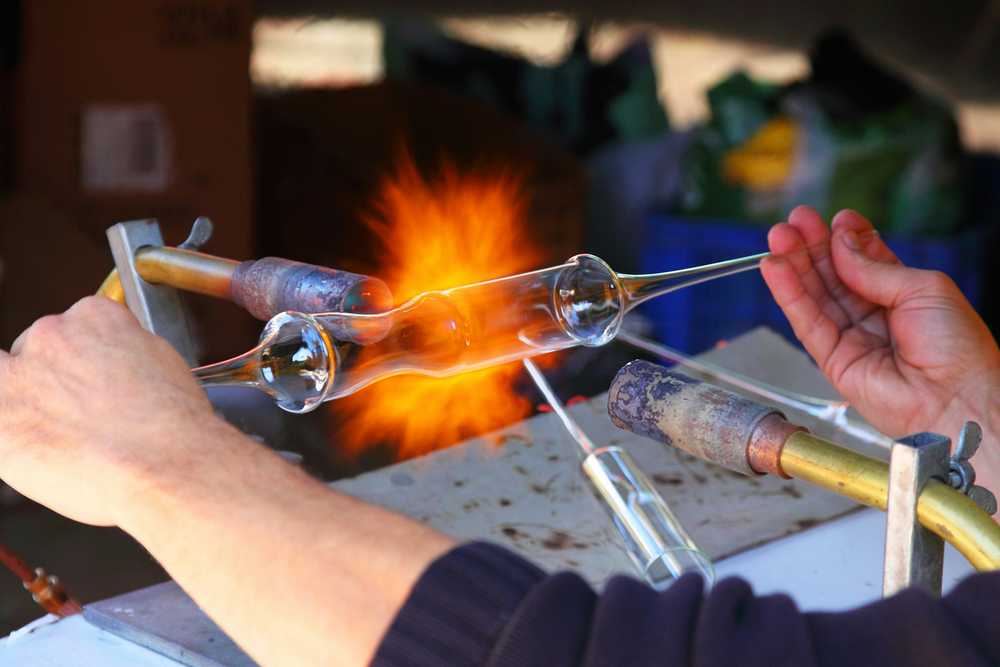 Heating up a test tube, by Quino AI
Classical Concepts:
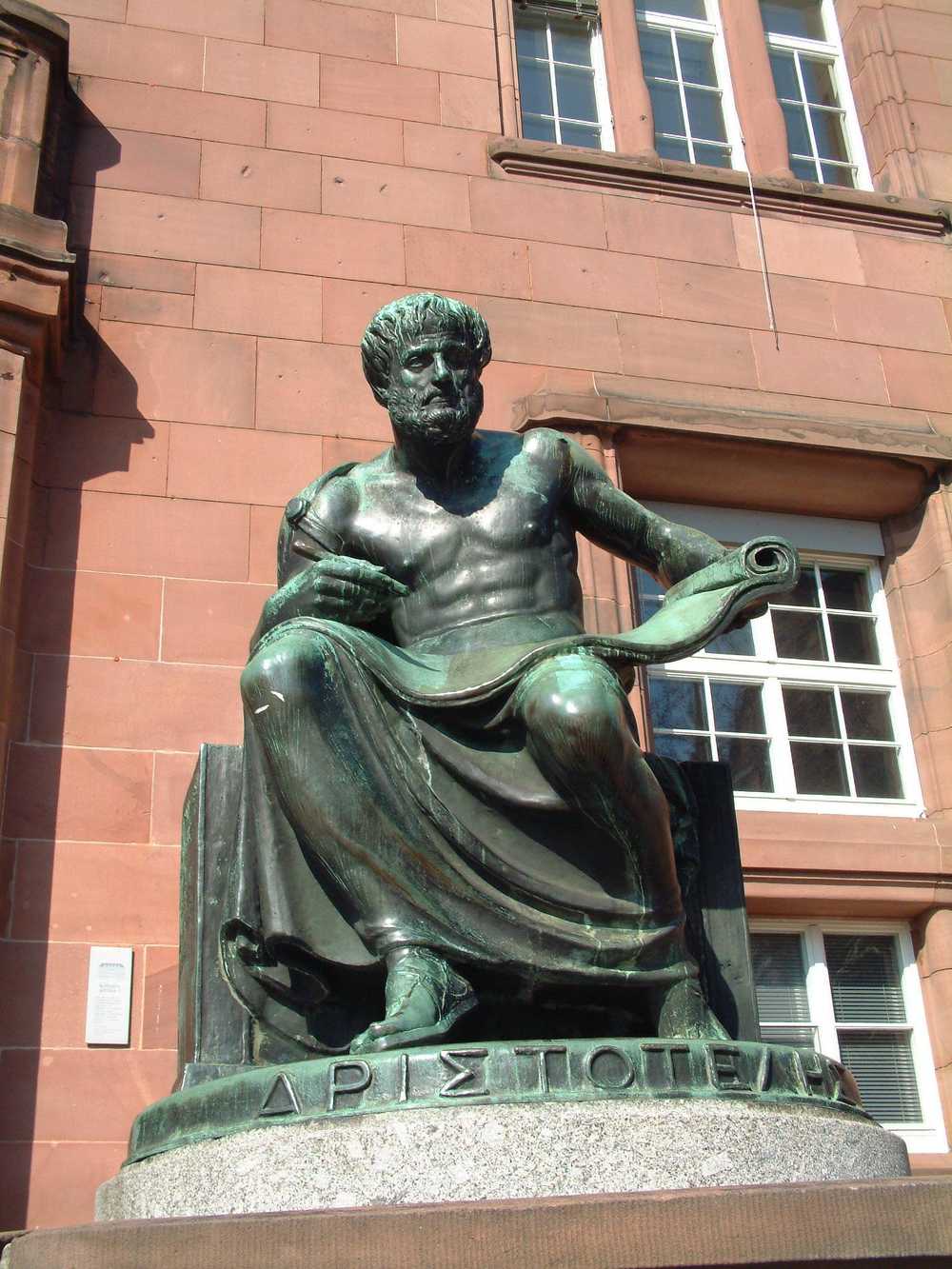
Okay this one is a doozy and possibly my favourite. Classical Concepts, or the Classical Theory of Concepts, refers to the idea that every single concept (baseball, house, having ambitions, etc.) can be defined as a set of necessary and sufficient conditions. Necessary conditions are features that must be present for the concept to fit into the category, whereas sufficient conditions are features that when met ensure the concept belongs to the category. For example, the concept "bachelor" has the following conditions: "unmarried", "male", "adult" (all of them being necessary but not sufficient on their own; an adult male isn't necessarily a bachelor).
This theory has many challenges, one of them being that sometimes concepts don't really fit into this model, meaning they can't be defined as a set of conditions. For example, the concept "furniture", is it indoors furniture ? (Not necessarily, some are outdoors) Does it have to be functional ? (not necessarily, some are just decorative) Is it robust ? (Not necessarily, some are made of cheap materials)...All to say it is very hard to come up with a set of conditions that perfectly define what the concept "furniture" is. For this reason, the Classical Concepts theory has been eclipsed by other more popular and recent theories such as the Prototype and Exemplar theories.
Superstring theory:
During the fight, Athena uses an attack called Superchain Theory, which is a clear reference to the Superstring theory. The latter is a version of the String theory which is an attempt to explain all of nature and existence by modelling particles and forces as vibrations of tiny strings. A string is a physical entity that acts like a particle but in one dimension (whereas particles are point-like objects and zero-dimensional).
This theory is actually not disproven, but lack of experimental evidence is really pushing forward the idea that it will never be conclusive.
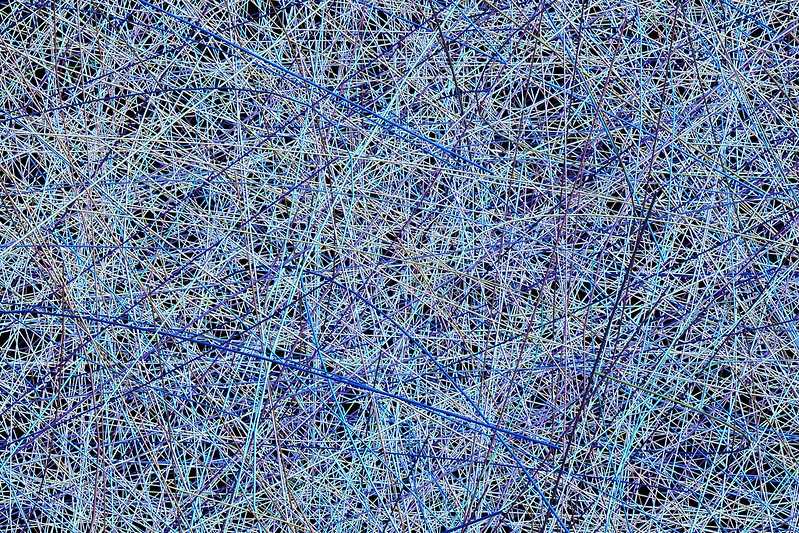 Superstring simulation by parameter_bond
Ekpyrosis:
This is another not really obsolete but somehow improbable theory. The Ekpyrotic model, often refenced with the Cyclic model, is an alternative to the Big Bang Theory which stipulates that the universe has no real end nor beginning, but rather experiences endless cycles of death and rebirth. It offers a different explanation to the origins of things. According to it the birth of the world is the result of the collision of two branes (high dimensional planes), which keep moving apart afterward and then slowly come back together for another collision, causing another destruction and creation of the universe.
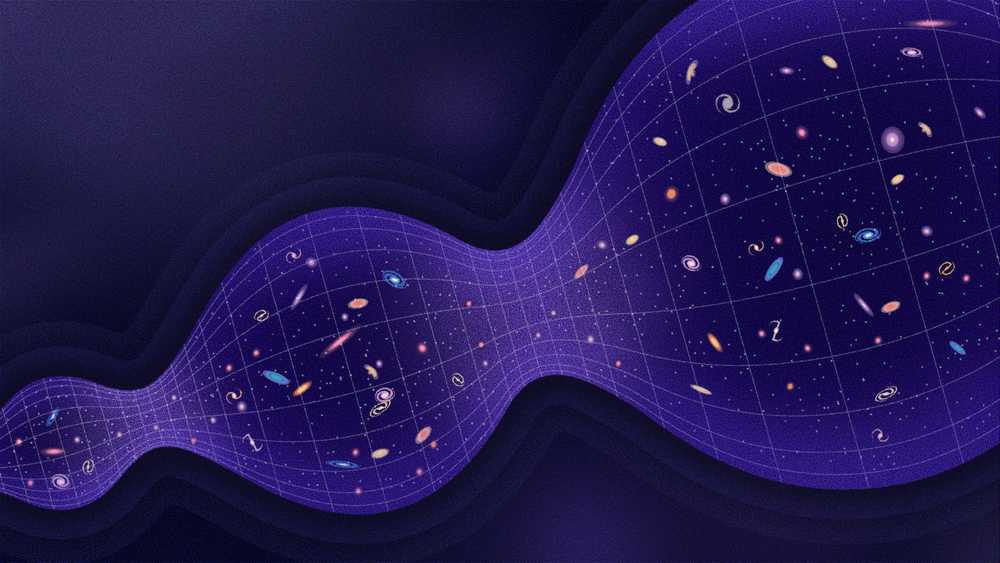 Cyclic model with expansions and contractions of the universe
Pangenesis:
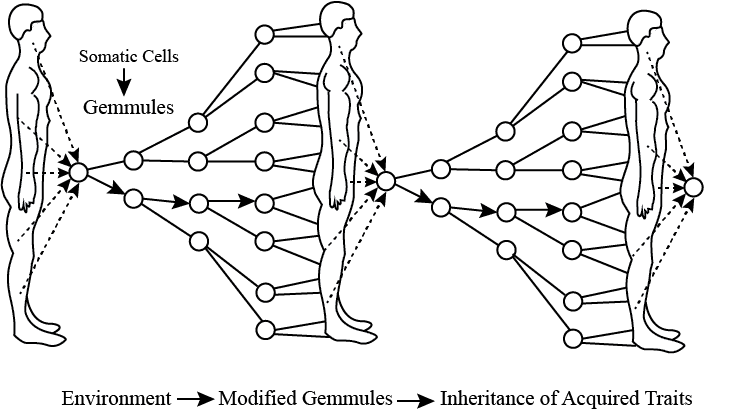
Unlike his darling theory of Evolution, Charles Darwin's attempt to explain heridity wasn't really popular. The Pangenesis is a hypothetical mechanism of how traits are passed down from parents to offsprings, it relies on the idea that all organisms produce tiny particles called gemmules which carry information about traits, they would then pass these to the offspring when reproduction happens. These gemmules would also change/mutate depending on the current state of the holder (for example, they would know about scars or diseases you would have, which means your kid could have the same scars as you).
It was later proven to be incorrect when scientists discovered genes and DNA.
Ignorabimus:
This one is actually no theory, but rather a latin expression which means "We will never know" or "we will always be ignorant". It refers to the idea that there are problems we humans will never be able to solve or understand, no mattter how advanced we get to be as a species. Some see it as defeatism, others as realistic acknoledgment of our limits as human beings. Eitherway, I believe it to be the perfect name for the final attack of Athena in FFXIV, as she utters while laying her arms "Why do we exist ? Why do I exist ?".